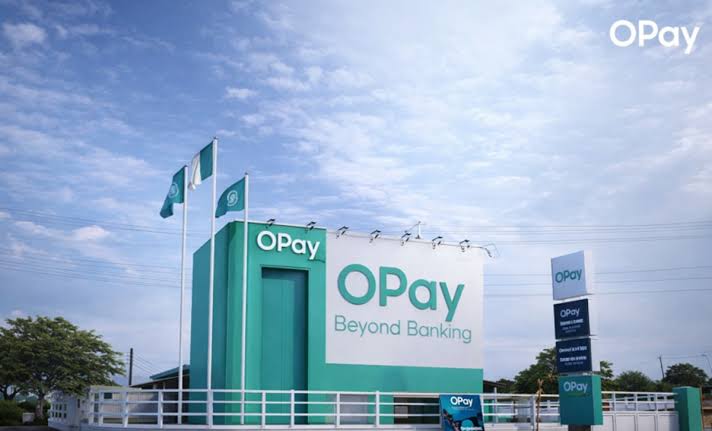
OPay lent more money to more Nigerians than ever this year. Now the cost of the loans that were never repaid is out in public, and it is big.
In the first half of 2026, OPay wrote off $113.15 million in loans, about ₦150 billion at the official rate of roughly ₦1,332 per dollar. That is up 520% on the same period last year, and more than the $69.95 million it wrote off in all of 2025. The figures come from OPay’s filing with the US Securities and Exchange Commission, made on 9 October as it prepares to list in New York. Even so, the company made a profit of $90.87 million, up from $21.71 million, because lending is now its biggest earner at $236.12 million.
That balance, big losses against bigger income, is the story of OPay’s year.
The growth. New Nigerian loans jumped to $927.63 million in the half-year from $305.12 million. The number of unique borrowers each quarter nearly doubled, from 3.5 million to 6.7 million. Lending brought in about half of OPay’s $467.06 million in revenue, overtaking payments. Nigeria accounts for about 85% of its lending income, according to Tekedia’s reading of the filing, and the rest comes from Indonesia.
The cost. OPay set aside $118.36 million in expected credit losses, up 210.3%. That equals 25.3% of revenue, up from 19.3%. In plain terms, about $25 of every $100 OPay earns is being put aside for loans that may not come back. At 30 June, $113.80 million in loans and interest was overdue. That is 27.4% of the $415.33 million owed, down from 34.2% in December. But the amount overdue rose, from $93.71 million. The share fell partly because the loan book grew so fast.
OPay’s own risk measure looks calmer. It reports that loans more than 90 days past due were 4.3% of its total loans at the end of June, compared with 5.2% at the end of 2025. The two numbers measure different things, so both matter: one counts anything late, the other only seriously late.
Why borrowers are not paying. The filing does not blame borrowers’ attitudes. It warns that economic stress can cut people’s ability to repay and make it harder to collect, and that fraud can leave loans unrecoverable. It also says longer loan terms could lead to more bad debt, and that OPay’s loss provisions might prove too small. OPay acknowledges relatively high interest rates on some Nigerian credit products. It says it has tightened consumer lending and is shifting towards merchant loans, which it considers lower risk, though it is too early to say whether that is working.
There is a useful difference in how the business is funded. In Nigeria, OPay mostly lends from its own balance sheet, so it carries the losses itself. In Indonesia, loans are funded by outside lenders and generally backed by credit insurance.
Why it matters: OPay is one of Nigeria’s most widely used financial apps, and millions of Nigerians borrow from it. Its numbers show how large digital lending has become, and how closely it follows the economy. For borrowers, the lesson is to compare the cost of an instant loan before taking it and to know how late repayment can affect future access to credit. For investors, the question is whether income from lending can keep outrunning losses. For regulators, the filing is a rare look at the real cost of lending at this speed in Nigeria.
What to watch next: whether OPay’s credit losses slow compared with its lending income, whether the amount of overdue loans falls and not just its share, what happens with its planned New York listing and a secondary listing in Nigeria, and whether it publishes a split of losses between Nigeria and Indonesia.
Sources: OPay Form F-1, US Securities and Exchange Commission; Nairametrics on OPay’s profit and lending income; Tekedia on OPay’s profit and credit losses; Crowdfund Insider on OPay’s IPO plans; Techeconomy on the naira rate. The naira figure is our conversion at the official rate of about ₦1,332 per dollar.
A note for startup founders: Don’t practice on investors. Practice on AI first. RaiseReady by Index Prima is an AI fundraising simulator for African founders: upload your pitch deck, get a readiness score and face a tough AI investor before the real meeting. Find this post, and every post we publish, at raiseready.indexprima.com.