The geopolitical race to secure AI infrastructure and talent pipelines is no longer confined to the boardrooms of Silicon Valley or the sovereign wealth funds of the Gulf. As global AI spending is projected to scale toward $2.5 trillion, African heads of state are aggressively positioning their nations as the primary talent engines for the next wave of compute and model deployment.
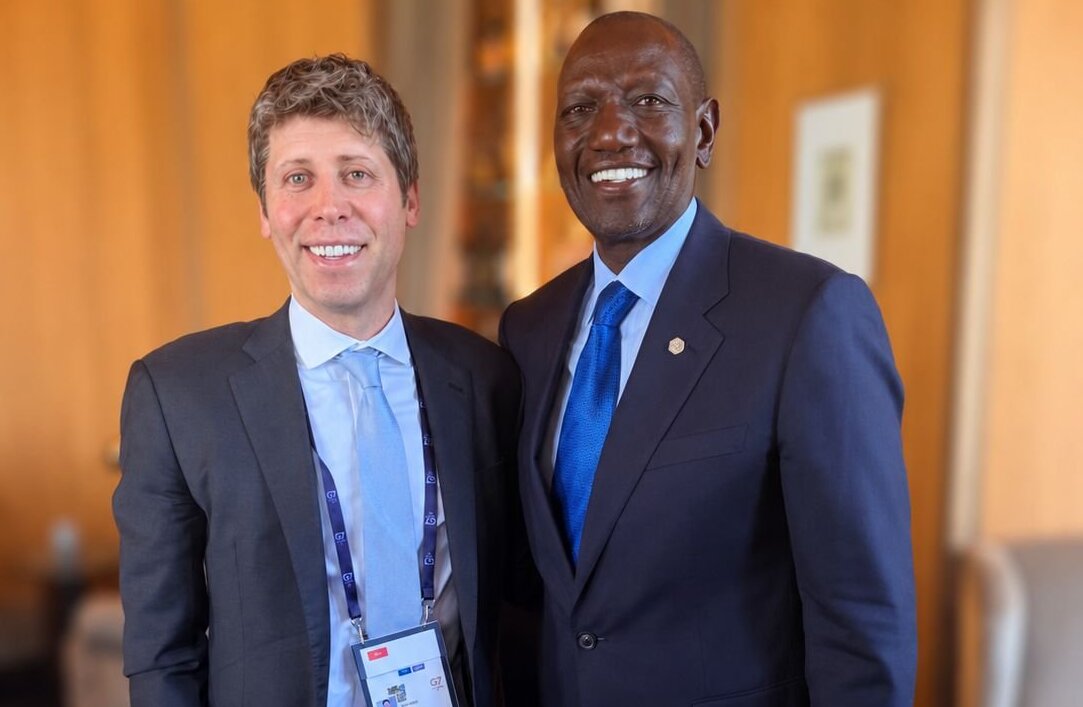
The latest structural anchor in this race dropped at the G7 Leaders’ Summit in France. Following a high-level meeting with OpenAI Chief Executive Officer Sam Altman, Kenyan President William Ruto announced preliminary discussions to establish Nairobi as the home of the first OpenAI Academy initiative in Eastern Africa.
If realized, the facility would mark OpenAI’s second official academy footprint on the continent—following its initial integration at the University of Lagos in Nigeria. However, as Nairobi positions itself to capture this regional mantle, the announcement highlights a critical tension point in the African tech ecosystem: the dividing line between grand diplomatic announcements and enduring industrial AI policy.
1. The Anatomy of the Proposal: What is the OpenAI Academy?
The proposed Nairobi initiative is designed as a foundational hub to transition Kenya’s massive software engineering base into specialized AI engineering.
Key Pillars of the Discussion
-
Curriculum & Core Digital Skills: Building a continuous training runway for local developers, data scientists, and machine learning engineers to build on top of OpenAI’s frontier models.
-
Educational Abstraction: Developing dedicated tools and resource tracks to support local educators and learners, attempting to embed AI literacies directly into the academic pipeline.
-
Workforce Readiness Layer: Accelerating Kenya’s existing dominance in Business Process Outsourcing (BPO) and knowledge-based services, moving local talent up the value chain from data labeling to model fine-tuning and localized system architecture.
“We explored potential collaboration through establishing Nairobi as the home of the first OpenAI Academy initiative in Eastern Africa, expanding AI education, strengthening digital skills, supporting educators and learners, and reinforcing Kenya’s position as a leading hub for AI talent and innovation.”
— President William Ruto
2. The Context: Why OpenAI is Anchoring in Nairobi
OpenAI’s strategic courtship of Kenya is not accidental. The East African nation possesses one of the highest per-capita adoption rates of generative AI tools globally, driven by a deeply digital-native youth population and a robust tech ecosystem commonly dubbed the “Silicon Savannah.”
                 THE GLOBAL ENTERPRISE AI REVENUE PIPELINE

  GLOBAL INFRASTRUCTURE LAYER:           LOCAL APPLICATION LAYER:
  ┌────────────────────────┐             ┌────────────────────────┐
  │ • OpenAI Models / APIs │             │ • Local Custom Agents  │
  │ • Silicon Valley Capital│ ◄──[BRIDGE]─►│ • High-Density Talent │
  │ • Heavy Compute Nodes  │             │ • Sovereign Context Data│
  └────────────────────────┘             └────────────────────────┘
                       ▲             ▲
                       │             │
                       └─── Nairobi ─┘
                       (OpenAI Academy)
For OpenAI, establishing localized academies across Africa (Lagos and potentially Nairobi) is a dual-track victory:
-
Securing Contextual Data Pipelines: To build models that reason effectively under global constraints, frontier labs require developer ecosystems capable of cleanly structuring, fine-tuning, and deploying tools within local regulatory and economic realities.
-
Defensive Talent Capture: By embedding their developer frameworks (APIs, tools, and sandboxes) directly into the regional university layer, OpenAI builds early, ironclad brand equity among the continent’s next generation of software architects before rival ecosystems solidify their positions.
Structural Matrix: Skills-First Program vs. Sovereign AI Infrastructure
| Strategic Vector | The Skills-First Academy Model (OpenAI Proposed) | The Sovereign AI Industrial Model |
| Primary Goal | Upskilling developers on existing external model APIs. | Building local compute, sovereign data sets, and custom base models. |
| Value Capture | Local developers get access to high-paying global remote roles. | Domestic retention of IP and equity in localized tech solutions. |
| Ecosystem Risk | Highly susceptible to “brain drain” and reliance on foreign cloud architecture. | High upfront capital expenditure requirements and compute resource scarcity. |
| Core Metric | Number of certified developers and platform API tokens consumed. | Number of enduring local B2B startups built and scaled. |
3. The Skeptic’s Lens: Moving Past “Photo-Op Policy”
While the announcement has generated immense optimism across East Africa’s developer communities, seasoned economic analysts urge a heavy dose of structural caution. As history shows, Africa has a persistent habit of confusing tech vendor certifications with actual industrial strategy.
The real challenge for the Kenyan Ministry of Information, Communications, and The Digital Economy will be preventing the proposed academy from becoming a glorified marketing platform. Training thousands of engineers to build on top of proprietary, closed-source American APIs does not automatically create local wealth. If a Kenyan startup builds an elite agribusiness tool using OpenAI’s infrastructure, but a shift in Silicon Valley’s pricing or access models cripples their margins, the local ecosystem remains fundamentally dependent.
True competitiveness in the 2026 AI economy requires matching skills training with localized capital formation, robust data sovereignty laws, and affordable access to compute energy.
The Index Take
The Ruto-Altman meeting signals a massive validation of Nairobi’s technological maturity. OpenAI is not entering Kenya out of philanthropic goodwill; they are entering because they recognize that Eastern Africa controls one of the most dynamic, high-velocity developer pipelines on earth.
However, for Kenya to truly win this engagement, the proposed OpenAI Academy must not operate in isolation. The state must use this leverage to demand deeper institutional commitments—such as localized server infrastructure investments, data-sharing partnerships that respect local privacy, and explicit funding tracks for homegrown B2B AI startups.
The future of Africa’s digital economy cannot be built as a mere consumer layer for foreign technologies. It must be built on a foundation where local talent is empowered to design, govern, and own the digital systems running their societies. The Nairobi OpenAI Academy is a brilliant starting point, but the true test will lie in whether Kenya can convert global developer skills into sovereign economic power.
Sources & References
-
[1] iAfrica Regional Ecosystem Desk: Kenya in Talks With OpenAI to Bring First OpenAI Academy in Eastern Africa to Nairobi
-
[2] TechCabal Strategic Analysis: What Ruto’s Meeting With OpenAI CEO Sam Altman Tells Us
-
[3] CIO Africa Technology Bureau: Kenya Eyes East Africa’s First OpenAI Academy as AI Leadership Ambitions Grow
-
[4] Tech-Ish Innovation Log: