The dominant theme defining the African tech ecosystem in mid-2026 is the deliberate migration away from consumer-facing hyper-growth models toward high-utility, unsexy business-to-business (B2B) infrastructure. For years, the spotlight was monopolized by payment gateways and digital consumer wallets. However, the true modern operational bottleneck for African companies isn’t just moving money; it is managing the staggering operational drag of running medium and large enterprises under complex macroeconomic constraints.
The launch of Tyms AI out of Kampala, Uganda, serves as a major milestone in this transition.
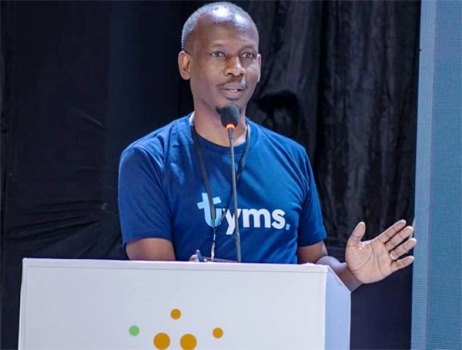
Led by veteran technology entrepreneur Allan Rwakatungu, the platform has entered the market with a specialized enterprise offering: a “human-first” artificial intelligence layer designed to handle day-to-day background drag across finance, compliance, sales, marketing, and human resources. By focusing strictly on automating corporate workflow logistics rather than consumer acquisition, Tyms AI highlights a broader macro trend—the rise of localized, operational software built specifically to handle the real-world complexities of African enterprise.
1. The Core Philosophy: Augmentation Over Substitution
A major flaw in global AI narratives—often imported directly into emerging markets—is the aggressive assumption that artificial intelligence will cleanly replace human labor stacks. In developing economies, where localized context, relationship-driven commerce, and adaptive problem-solving are paramount, pure algorithmic substitution frequently fails to absorb real-world nuances.
Tyms AI has built its entire infrastructure against this substitution myth, organizing its system design around a clear operational principle: People bring the wisdom, judgment, and taste; software handles the drudgery.
                 THE ENTERPRISE PROCESS FLOW

  TRADITIONAL LAYER:
  [Data Gathering] ➔ [Manual Analysis] ➔ [Manual Reporting] ➔ [Human Execution]
  *Result: Heavy operational drag; high time-to-decision latency.*

  TYMS AI DEPLOYMENT:
  [Automated Collection] ➔ [AI Synthesis & Monitoring] ➔ [Human Taste & Judgment]
  *Result: Zero invisible work; rapid strategic execution.*
Instead of deploying a centralized, top-down automation engine that alienates human teams, the platform provisions a personalized AI assistant for every employee and customer within the enterprise ecosystem. This distribution allows human operators to delegate mechanical, high-frequency background steps while retaining absolute control over final strategic sign-offs and creative nuances.
2. Unpacking “The Invisible Work Stack”
In medium and large African enterprises, a vast percentage of payroll hours is quietly consumed by what operations experts call invisible work—the exhausting, repetitive cycle of collecting disparate data, manually reconciling records across fragmented local compliance tools, compiling internal logs, and monitoring operational background systems.
Tyms AI handles this friction by deploying intelligent agents across core corporate operational pillars:
-
Finance & Compliance Architecture: The platform automates real-time tracking, background ledger audits, and regular compliance monitoring, allowing local finance teams to stay completely aligned with shifting regional tax policies and digital reporting requirements.
-
Sales & Marketing Synthesis: Instead of forcing staff to manually dig through legacy databases or communication logs, AI agents continuously scan, organize, and synthesize customer interaction patterns to identify latent commercial pipelines.
-
Customer Support Abstraction: By placing dedicated AI assistants at the frontline of customer touchpoints, the platform handles routine informational sorting and initial triaging, escalating only complex, relationship-heavy queries to human account executives.
Strategic Shift: Fragmented B2B Software vs. Unified Intelligent Agents
| Operational Vector | The Legacy Enterprise Stack | The Autonomous Agent Stack (2026) |
| Data Consolidation | Disconnected Excel logs, local ERPs, and siloed communication trails. | Continuous background collection, search synthesis, and system indexing. |
| Operational Velocity | Days wasted on manual reporting and cross-departmental data requests. | Near-instantaneous report generation and automated background jobs. |
| Implementation Strategy | Expensive, multi-month software rollouts requiring deep engineering support. | Lightweight web infrastructure shifting soon to Slack and Microsoft Teams. |
| Organizational Readying | Expecting staff to figure out software logic via trial and error. | Structured “Best Work Masterclasses” and hands-on corporate AI advisory. |
3. The Onboarding Strategy: Recognizing That Code Requires Context
A common trap for enterprise SaaS platforms on the continent is assuming that simply delivering access to a web portal guarantees adoption. Successful enterprise execution requires a deep understanding of organizational change management.
To bypass this hurdle, Tyms AI is launching a hybrid operational strategy that extends well beyond standard software delivery:
The Advisory Hybrid: Alongside its primary web application, the company is deploying specialized AI Advisory Services and Best Work Masterclasses. This approach acknowledges that to succeed with intelligent automation, an enterprise must first clean its data lines, optimize its internal processes, and explicitly train its teams on how to manage an algorithmic workforce.
By anchoring its software inside a practical advisory framework, the platform helps legacy corporate teams bridge the gap between historical operational methods and modern, agent-driven workflows.
The Index Take
The arrival of Tyms AI represents a vital sign of maturity for East African technology. For too long, the region’s tech sector was evaluated solely on its ability to build local variations of foreign B2C applications. The real value capture, however, lies in solving the deep, systemic operational inefficiencies that stifle the growth of domestic medium and large corporations.
When an enterprise can offload its invisible background drudgery to specialized digital agents, it drastically lowers its cost of doing business, eliminates time-to-market friction, and unlocks the true strategic potential of its human workforce.
As the platform rolls out its integrations with dominant workplace communication channels like Microsoft Teams and Slack later this year, it sets a compelling precedent for the continent’s software sector: the future of African tech isn’t about replacing the human element—it’s about building the infrastructure that allows human capability to scale.
Sources & References
-
[1] Disrupt Africa Ecosystem Desk: Uganda’s Tyms AI Launches to Help Businesses Run Operations Faster, Smarter
-
[2] WeeTracker Venture Log: Tyms AI Launches Human-First AI Platform for Medium and Enterprise Businesses
-
[3] The Independent Uganda Technology Bureau: Tyms AI Enters Business Market With New Smart Tool to Ease Work
-
[4] ITEdgeNews Africa Strategic Insights: Tyms AI Launches Human-First AI Platform to Help Businesses Work Smarter and Faster
Ashwag A Elsayed and the Blimpy Blueprint, Eliminating “Ghost Conversions” in East African Tech