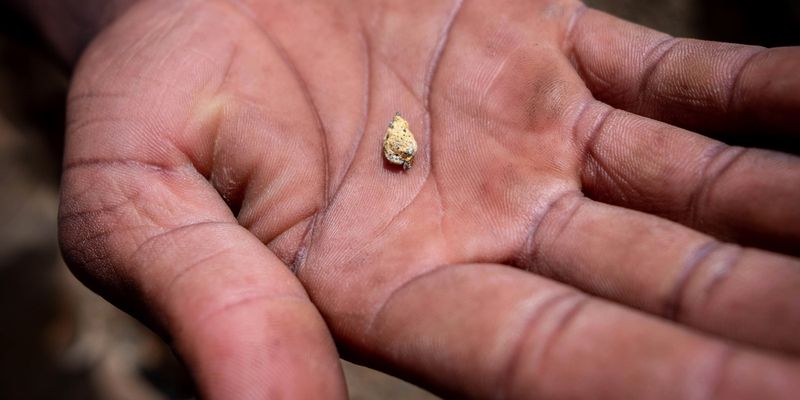
Senegal’s Ministry of Mines and Geology and the Caisse des Dépôts et Consignations (CDC) signed an agreement on July 30 to build a biometric identification system for the country’s artisanal gold miners, issuing secure professional ID cards to a workforce that has operated almost entirely outside official records. The trigger is a striking number: authorities estimate Senegal loses more than CFA 350 billion — roughly $614.4 million — every year because upwards of 40 tonnes of artisanal gold production simply can’t be traced back to a mine, a miner, or a transaction the state can tax.
How the System Is Meant to Work
Implementation falls to Synapsys Conseils SA, the CDC’s specialised technology subsidiary, which will deploy the biometric enrolment infrastructure and manage the resulting data on artisanal operators. The goal is a comprehensive national database answering three basic questions the state currently can’t: who is mining, where they’re operating, and under what conditions. Beyond identification, the system is designed to trace gold production and the financial flows tied to it, extend social protection to miners who’ve had none, and bring administrative oversight to a workforce that has largely existed outside official statistics entirely.
Why the Number Is So Large
The southeastern region of Kédougou accounts for nearly all of Senegal’s identified artisanal mining sites, but identification hasn’t meant control. Mining Minister Cheikh Oumar Seck put the scale of the gap in blunt terms: production estimated at more than 40 tonnes of gold a year moves through channels the state cannot see, and a meaningful share of it feeds various forms of trafficking rather than the formal economy. That framing matters — this isn’t presented as inefficiency at the margins of a working system, but as a structural gap that has persisted through multiple governments and earlier attempts at reform.
More Than a Revenue Problem
The fiscal loss is the headline figure, but Senegalese authorities frame the traceability gap as a broader governance failure. An informal sector this large, moving this much value with no oversight, has been linked to water pollution around mining communities, rising insecurity, and openings for criminal groups to infiltrate artisanal mining areas. Investigations into Kédougou’s mining zones have previously documented Chinese-led crews operating illegally, including inside the protected Niokolo-Koba National Park, reportedly paying local officials for access — the kind of activity that thrives precisely because no formal system tracks who’s supposed to be mining where.
A Bigger Ownership Play
The July 30 agreement isn’t limited to artisanal miners. It also provides for an increase in the Senegalese state’s shareholding in major, large-scale mining companies — a detail that reframes the biometric rollout as one piece of a wider push to strengthen state control across the entire mining sector, not just its informal edges. Read together, the two provisions suggest Senegal is treating gold as a strategic asset it wants a firmer grip on at every scale, from the artisanal panner to the industrial operator.
Not the Only Leak
Untraceable artisanal production isn’t the only channel through which Senegal loses mining revenue. Separate research into the sector has pointed to trade misinvoicing on gold exports — particularly shipments to the United Arab Emirates — as another route through which value slips past the tax authorities, distinct from the informality problem this new registry targets. That suggests even a fully successful rollout of biometric IDs for artisanal miners would close only part of the gap between what Senegal’s gold sector generates and what actually reaches the treasury.
Whether Formalisation Can Stick
The real test isn’t the signing ceremony; it’s whether a biometric registry succeeds where previous formalisation efforts have not. Senegal has tried to bring artisanal mining under state oversight before, with limited durable results, which is what makes this specific structural gap — compounded over decades rather than closed by any single administration — such a high-stakes target for reform. There’s also a regional dimension worth watching: the CDC-anchored model Senegal is using here could plausibly transfer to other Francophone West African states that run comparable development finance institutions, though miner mobility and cross-border gold flows mean no single country’s registry can fully solve a problem that doesn’t respect borders.