ThriveAgric has raised ₦5.3 billion, roughly $3.94 million, in the first series of a commercial paper programme that could eventually grow to ₦50 billion, about $37 million. The Y Combinator-backed Nigerian agritech company announced the deal during a signing ceremony and media briefing in Lagos, and the offer was oversubscribed, pulling in institutional demand well above its initial ₦5 billion target. The transaction marks ThriveAgric’s first entry into Nigeria’s debt capital markets, opening a funding channel beyond the bank lending the company has relied on for most of its history.
Why Debt, Not Equity
ThriveAgric CEO Uka Eje has been direct about the thinking behind the raise. “This is why it’s not equity, it is debt to expand our business in Nigeria,” he said, framing commercial paper as a better fit for the company’s operations than another round of dilutive fundraising. His argument is that coming to the capital markets this way opens access to cheaper debt, and that agriculture becomes more scalable and more sustainable as a business once financing itself becomes genuinely attractive rather than expensive and hard to access. It’s a notable stance from a startup CEO given how much of African tech coverage still centres on equity rounds, and it reflects a business model where debt, used correctly, may actually make more sense than giving up ownership.
What the Money Is Actually For
The specifics matter here more than usual, because ThriveAgric is matching this particular financing instrument to a very particular part of its business. The company’s core model involves financing farmers, purchasing their produce after harvest, aggregating it, and selling it on to food processors and fast-moving consumer goods companies. Agricultural production itself is a slow cycle, often nine to twelve months from planting to harvest, which calls for longer-term capital. Commodity aggregation and trading move much faster, and that shorter cycle is exactly what commercial paper, a short-term debt instrument, is built for. Rather than financing crop production directly, the proceeds will fund working capital to purchase produce from smallholder farmers and supply it to established buyers, letting ThriveAgric deploy and recover capital faster than a longer-term loan would allow.
Who Structured the Deal
Anchoria Advisory Services acted as lead issuing house for the transaction, with BAS Capital, Mulberry, FCMB Capital Markets, and FCSL also involved in the issuance. ThriveAgric has not disclosed which specific institutional investors participated, though the oversubscription itself signals real appetite among Nigerian institutional lenders for exposure to a well-established agritech operator’s short-term trading cycle.
Not ThriveAgric’s First Time Betting on Debt
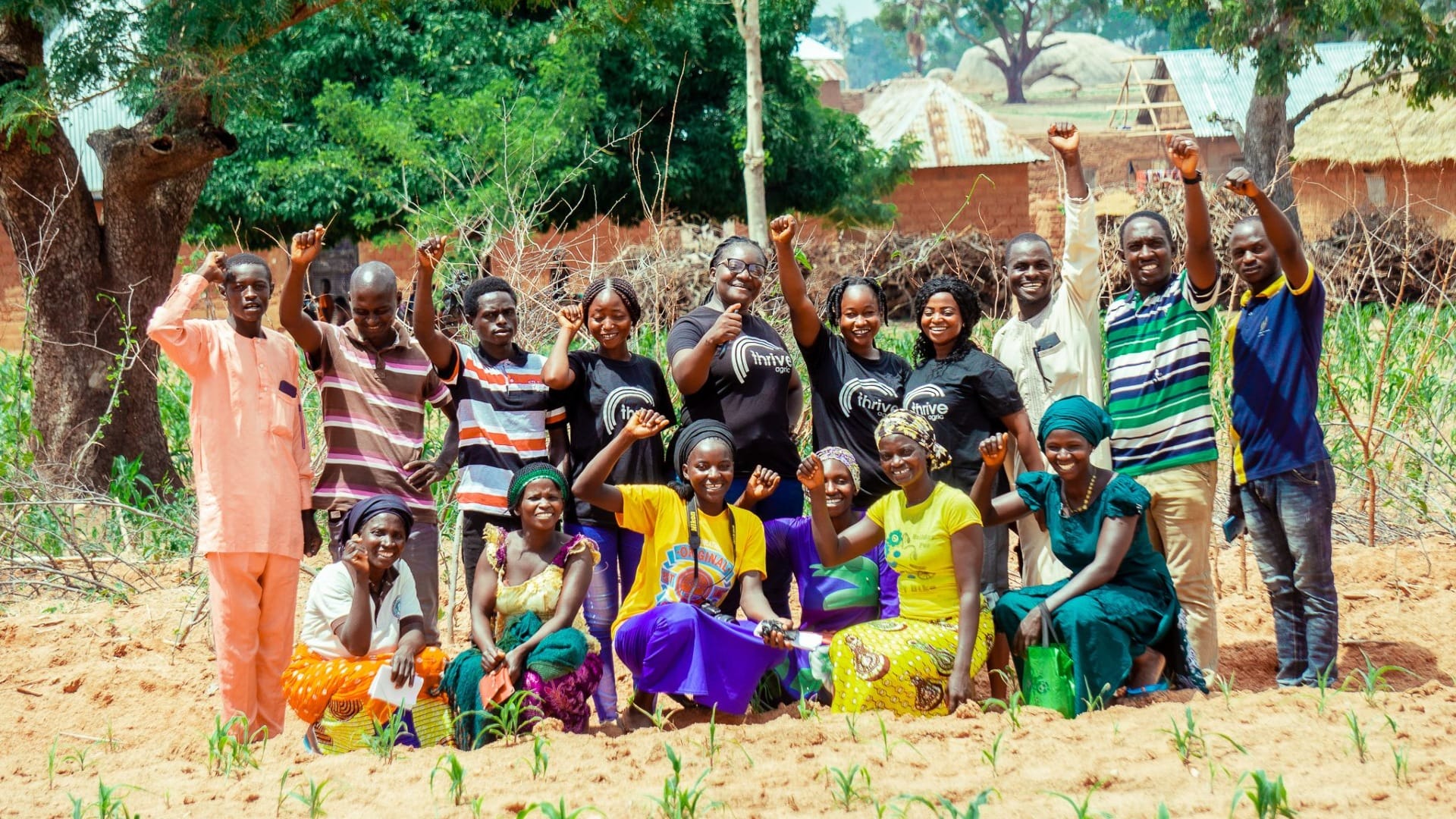
This raise extends a funding pattern ThriveAgric has leaned on for years rather than a sudden pivot. Back in 2022, the company secured $56.4 million in debt financing from local commercial banks and institutional investors, plus a $1.75 million co-investment grant from the USAID-funded West Africa Trade and Investment Hub, capital that supported its farmer network and its expansion into Ghana, Zambia, and Kenya at the time. Where that earlier raise was explicitly about geographic growth, this new commercial paper programme is aimed squarely at deepening ThriveAgric’s existing Nigerian operations rather than entering new markets. Nigeria remains by far the company’s largest market, accounting for roughly 90% of its business, even as it continues operating across Ghana, Kenya, Uganda, and Rwanda.
The Bigger Picture
The timing lines up with genuine momentum in Nigeria’s agricultural sector, which accounted for 23.16% of the country’s real GDP in the first quarter of 2026 and grew 3.15% year over year, according to the National Bureau of Statistics, with crop production remaining its largest component. Against that backdrop, working capital for the businesses that actually connect smallholder farmers to processors and manufacturers is a genuine bottleneck, and ThriveAgric’s model, an agricultural operating system supporting farmer registration, input distribution, field monitoring, and inventory tracking for more than 1.2 million smallholder farmers, sits directly in that gap.
What Comes Next
This ₦5.3 billion Series 1 issuance is just the opening move under ThriveAgric’s SEC-approved ₦50 billion commercial paper programme, and Eje has said the company expects to make further issuances over the next 12 months as it works toward that full ceiling. If it succeeds, ThriveAgric will have built a repeatable, capital-markets-based funding channel for its trading business, one that runs independently of both traditional bank lending and the equity rounds that dominate most African startup funding headlines.