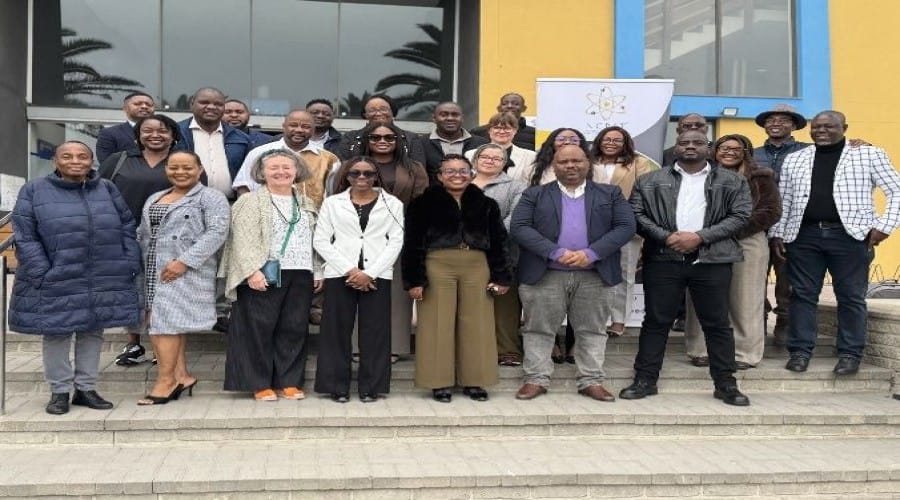
Gabon marked the completion of a nine-month cybersecurity training programme on September 10, with certificates presented to participants from the Agence Nationale des Infrastructures Numériques et des Fréquences (ANINF) and other government institutions at a ceremony held at ANINF’s headquarters in Libreville. The programme, delivered by experts from MITRE, ran from January through September 2026 and focused specifically on the MITRE ATT&CK framework and Cyber Threat Intelligence, combining structured methodology sessions with hands-on practical workshops.
What Participants Actually Learned
The training was built around teaching participants to think the way an attacker does. Trainees learned to assess attackers’ profiles, tactics, and behaviour, identify the traces a compromised system leaves behind after an intrusion, and reconstruct how a cyberattack actually unfolded step by step. That same work extended into identifying the specific tactics, techniques, and procedures attackers use inside IT environments, the kind of granular pattern recognition that separates a team that can only react to an obvious breach from one that can catch and interpret warning signs earlier in an attack’s progression. ANINF said the resulting skills will directly strengthen the country’s ability to detect, investigate, and respond to cyber threats going forward.
Part of a Longer, Two-Year Partnership
This training programme isn’t a standalone event, it’s one phase of a structured, multi-year engagement between Gabon and MITRE. The relationship formally launched with a set of workshops held January 20 to 23, 2026, during which MITRE experts assessed ANINF’s existing cyber maturity level, reviewed the systems already in place, and identified specific areas where Gabon’s national cybersecurity governance needed strengthening. That same early phase also produced something concrete: the identification of 12 priority sectors considered essential to Gabon’s operational stability, effectively a first map of the country’s critical national infrastructure from a cybersecurity standpoint. A later working session at ANINF’s headquarters built directly on that groundwork, focusing specifically on designing the operational and institutional architecture Gabon’s cybersecurity function should actually run on. The nine-month training programme that just concluded is the next layer on top of that foundation, translating an assessment and an architecture into practical, hands-on skills for the people who’ll be doing the day-to-day work of defending Gabon’s systems.
Who’s Behind the Programme
Certificates were presented jointly by Alberto Mounguengui Moudoki, ANINF’s Managing Director, and Denise Olsen, a cybersecurity expert and project manager at MITRE, symbolically marking the partnership as a genuine collaboration rather than Gabon simply receiving outside training. MITRE itself is a US-based nonprofit widely recognised for its work in cybersecurity, systems engineering, and public-sector technology, and its involvement here runs through a broader cybersecurity partnership between Gabon and the United States, with MITRE providing the technical expertise behind that cooperation.
Why This Fits Gabon’s Bigger Priorities
The programme lines up closely with stated national priorities under President Brice Clotaire Oligui Nguema’s government, particularly around digital sovereignty, modernising public administration, and protecting strategic infrastructure. Building cybersecurity capacity inside government institutions like ANINF, rather than relying indefinitely on outside expertise every time a threat needs investigating, is a direct, practical expression of that sovereignty goal: the ability to detect and respond to cyber threats using Gabonese personnel and Gabonese-held institutional knowledge, rather than depending on external partners for that response every time.
Why It’s Worth Watching
A nine-month training programme won’t singlehandedly make Gabon’s digital infrastructure attack-proof, and no government’s cybersecurity capacity gets built in one certificate ceremony. What makes this worth tracking is the structure behind it: a two-year partnership that moved deliberately from assessment, to identifying critical infrastructure priorities, to architectural design, to hands-on operational training, rather than treating cybersecurity capacity-building as a single workshop and calling it done. For a country actively working to modernise its public administration and protect infrastructure it considers strategically essential, that kind of sequenced, sustained approach is a considerably stronger foundation than a one-off training session would have provided on its own.