The architectural definition of digital storefronts across Sub-Saharan Africa has broken completely free from traditional e-commerce frameworks. For years, small and medium businesses (SMBs) operated on a fragmented double-track system: they hosted their operations on legacy websites or payment links, while using social media platforms purely as top-of-funnel marketing billboards to capture eyeballs.
But as we pass mid-2026, the lines dividing content creation, consumer attention, and immediate transactional execution have completely vanished. Driven by infrastructure-wide mobile-first adoption, Nigeria’s social commerce ecosystem is expanding rapidly, on track to jump from a $2.04 billion baseline toward a massive $4 billion market valuation by 2030. The modern storefront is no longer a URL; it is an active, algorithmic video feed.
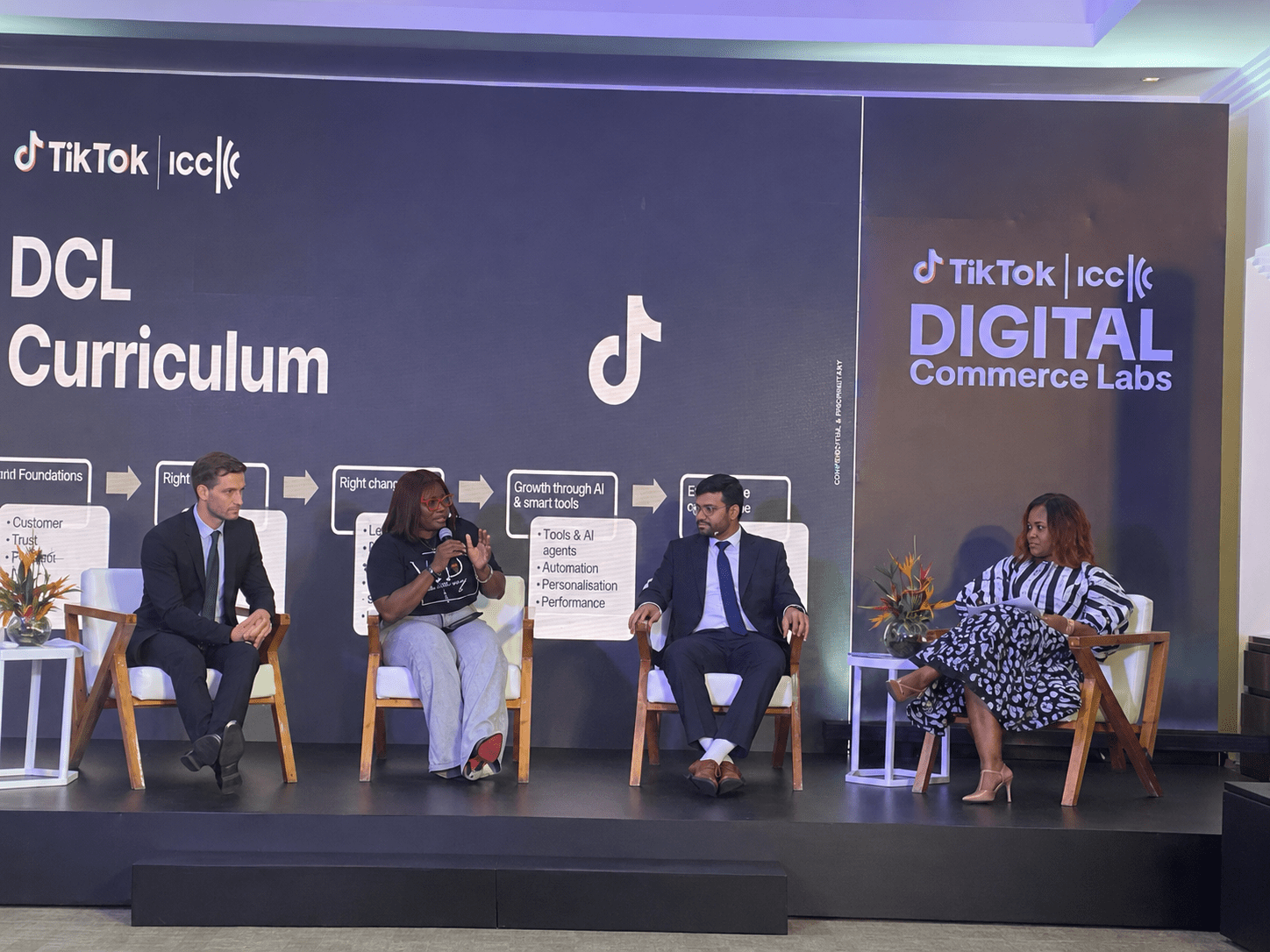
Recognizing this seismic structural shift, global short-form video giant TikTok, in a strategic alliance with the International Chamber of Commerce (ICC), has officially launched the Digital Commerce Labs (DCL) initiative in Lagos, Nigeria. Supported locally by a $20,000 (~₦27.2 million) initial pilot investment from TikTok to anchor a specialized Train-the-Trainer model alongside the National Information Technology Development Agency (NITDA), the initiative is designed to transition Nigerian MSMEs from passive localized content creators into sophisticated, export-ready global merchants.
1. The Multi-Layered Alliance: Structuring the Execution Rails
What sets the Digital Commerce Labs apart from generic corporate digital training programs is its multi-layered, public-private operational architecture. Instead of running an isolated tech incubator, TikTok and the ICC have wired the initiative directly into Nigeria’s domestic enterprise and policy frameworks.
                  THE DIGITAL COMMERCE LABS EXECUTION CORRIDOR

   TRAFFIC & CAPABILITY ENGINE                 POLICY & LOCAL STABILIZATION
  ┌───────────────────────────┐               ┌───────────────────────────┐
  │ • TikTok: Social Commerce │               │ • NITDA: National Scale   │
  │   Audience & AI Ad Rails  │               │   via $20K DL4ALL Pilot   │
  ├───────────────────────────┤   [BRIDGED]   ├───────────────────────────┤
  │ • ICC: Cross-Border Trade │ ◄───────────► │ • LSETF: Bookkeeping,     │
  │   & Export Compliance     │               │   Taxation, & Credit Access│
  └───────────────────────────┘               └───────────────────────────┘
The programmatic stack is built upon four distinct institutional layers:
-
The Commercial Conversion Engine (TikTok): Equipping business owners with advanced algorithmic audience building, live-stream shopping workflows, video-based product placement, and embedded artificial intelligence marketing tools.
-
The Global Trade Advisory (ICC): Providing small businesses with the institutional trade frameworks, regulatory guidelines, and custom logistics modules required to clear international cross-border border friction.
-
The National Scale Network (NITDA): Backed by TikTok’s initial $20,000 deployment, NITDA is integrating the curriculum directly into its Digital Literacy for All (DL4ALL) network via a pilot Train-the-Trainer initiative, creating a decentralized cascade of digital skills into remote and underserved local markets.
-
The Financial Formalization Buffer (LSETF): The Lagos State Employment Trust Fund steps in to ensure long-term business survivability, training merchants in corporate bookkeeping, legal restructuring, and taxation compliance while opening direct pathways to institutional small-business loans.
2. Moving Up the Value Chain: From Views to Verified Revenue
For the average Nigerian entrepreneur operating in hubs like Lagos, Aba, Kano, or Port Harcourt, attention has never been the primary constraint—the bottleneck has always been monetizable conversion and international execution. A business can rack up millions of views on a viral clip, yet fail to convert that traffic into consistent bankable margins due to erratic domestic delivery networks, lack of financial formalization, or an inability to process cross-border payments.
“We want to empower SMBs so that they aren’t just marketing or selling to their community, but they also get to a point where their business has grown enough to export their goods and services as well. The world has gone digital; we need Nigerian entrepreneurs to be able to deliver on a level playing field with entrepreneurs from across the world.”
— Tokunbo Ibrahim, Acting Head of Government Relations and Public Policy for Sub-Saharan Africa, TikTok
Structural Matrix: The Social Commerce Paradigm Shift
| Operational Vector | The Legacy “Social Media Marketing” Track | The Modern 2026 Digital Commerce Labs Framework |
| Core Success Metric | Superficial platform engagement (Likes, Views, Comments). | Direct conversion rates, cross-border transactions, and verified export volume. |
| Target Market Scale | Hyper-localized micro-communities and neighborhood delivery grids. | Programmatic international trade corridors built on global e-commerce rails. |
| Operational Workflow | Manual DM negotiations, unverified bank transfers, and loose tracking. | Integrated digital catalogs, automated bookkeeping, and clean tax compliance structures. |
| Capital Linkage | Complete isolation from formal commercial banking networks. | Explicit pipeline integration into LSETF structural small-business credit lines. |
3. The Geopolitical Subtext: Why TikTok is Funding the Grassroots
From a macroeconomic standpoint, TikTok’s targeted investment into the Sub-Saharan African retail landscape is a highly calculated defensive play. As regulatory frameworks tighten globally, the platform is moving aggressively to position itself as an indispensable engine of sovereign macroeconomic development rather than a mere entertainment application.
By investing capital into NITDA’s national literacy network and co-authoring business models with the International Chamber of Commerce, TikTok embeds its proprietary commerce tools directly into the foundational infrastructure of African trade.
When thousands of small fashion designers, agricultural processors, and light manufacturers rely entirely on TikTok’s video commerce layer to source their global client base, the platform transitions from an app on a smartphone to an essential piece of national economic infrastructure.
The Index Take
The true validation of the Digital Commerce Labs initiative lies in its refusal to treat digital literacy as an isolated skill. Training an entrepreneur to make a sleek video is meaningless if they don’t know how to declare corporate taxes or clear customs at an international port of entry.
By pairing TikTok’s unmatched cultural attention capture with the ICC’s deep institutional trade expertise, and reinforcing both with local regulatory and credit backing via NITDA and LSETF, this coalition has designed a rare, holistic capability pipeline.
The future of Africa’s economic resilience will not be built on the backs of extractive commodity exports, but on the systematic enablement of its high-velocity, digital-native MSME class. By building the infrastructure that converts casual online attention into formal, cross-border commercial trade, the Digital Commerce Labs is pointing the way toward a highly integrated, sovereign digital economy.
Sources & Reference Context
-
[1] TechBuild Africa Policy Log: TikTok, ICC Unveil Initiative to Expand Digital Commerce Opportunities for Nigerian SMBs
-
[2] THISDAYLIVE Economic Desk: TikTok, ICC Set to Boost Nigerian SMEs with Digital Commerce Labs
-
[3] Premium Times Enterprise Report: TikTok, ICC Launch Digital Commerce Labs in Nigeria
-
[4] TechAfrica News Bulletin: NITDA Partners with TikTok to Launch Digital Commerce Lab for SMEs in Nigeria