In the high-stakes theater of African tech folklore, venture scale is typically measured by servers, pitch decks, and foreign institutional capital. Founders are idealized as singular, stoic architects navigating the market in isolation. Yet, one of the most structurally significant success stories in the continent’s digital history did not just rely on a capital injection from Silicon Valley or New York; it was engineered on a single mattress laid across the floor of an office boys’ quarters in Lagos.
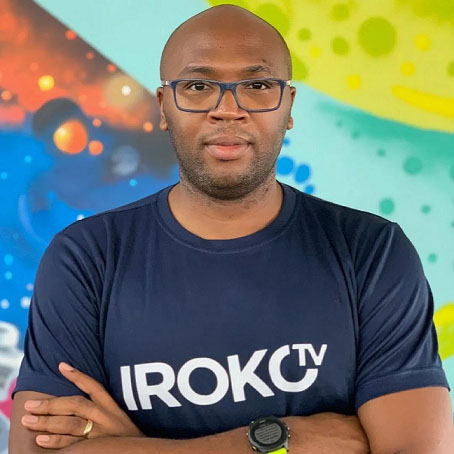
In 2011, Jason Njoku was a hyper-intense, relentlessly persistent entrepreneur coming off ten consecutive failed business attempts. He was trying to build the infrastructure for what would become IROKOtv—dubbed the “Netflix of Africa”—aiming to digitize and monetize Nollywood’s massive, fragmented catalog for a global diaspora. Along the way, he met Mary Remmy, a rising Nollywood actress and producer.
What followed was an extraordinary partnership that rewrote the playbook for vertical integration in African media, culminating in one of the most notable international M&A exits the regional entertainment ecosystem has ever witnessed.
The Absurdity of the Capital Runway
The early corporate architecture of IROKOtv reveals a stark paradox that highlights the grueling realities of startup execution. Shortly after their marriage in 2012, Jason and Mary found themselves living inside the boys’ quarters of the very building that housed IROKOtv’s operational headquarters.
The absurd detail? They were sleeping on a basic mattress on the floor while sitting on a $3 million cash injection from tier-one international investors like Tiger Global.
+-------------------------------------------------------------+
|               THE EARLY NJOKU BALANCING ACT                 |
+------------------------------+------------------------------+
|      Venture Capital Rails   |     Operational Reality      |
+------------------------------+------------------------------+
|  • $3M+ Tiger Global Cash    |  • Shared mattress on floor  |
|  • Aggressive content buyup  |  • Extreme cost suppression  |
|  • High-burn tech building   |  • 10 previous failed pivots |
+------------------------------+------------------------------+
Instead of deploying that capital toward personal comfort or premium real estate, the couple compressed their personal cost basis to near-zero. Every single dollar of institutional liquidity was weaponized to buy up digital distribution rights for Nollywood films. Within five breakneck months, the $3 million runway was entirely exhausted, poured directly into the content pipeline.
During this high-friction period, Mary didn’t just offer emotional support; she supplied critical industry context. As an actress embedded deep within the traditional legacy framework of Nollywood, she possessed an intrinsic understanding of how content was produced, distributed, and valued on the ground—insight that a purely software-minded founder could never scrape from a spreadsheet.
Hard-Coding the Content Engine
By 2013, IROKOtv faced a massive existential threat common to all streaming infrastructure plays: the rising cost of licensing content from third-party aggregators. As platform distribution scaled, licensing fees grew prohibitively expensive, squeezing the startup’s unit economics.
To solve this systemic supply issue, Mary transitioned from the front of the camera to the backend of corporate operations, launching ROK Studios in August 2013 under the broader iROKO Partners umbrella.
“ROK was born out of a desire to own the IP layer,” the founders frequently noted. “If you don’t control the manufacturing line of the content you stream, your platform remains at the mercy of the market.”
Mary took absolute operational control of ROK, establishing a hyper-efficient production machine in Anthony Village, Lagos. Under her management, ROK systematically optimized Nollywood’s traditional, chaotic filmmaking process. The studio built an assembly line that generated over 540 original feature films and 25 television series.
By verticalizing the supply chain, the Njokus created a closed-loop system: Mary manufactured the proprietary intellectual property at a predictable, optimized cost, and Jason’s digital networks distributed it globally. ROK rapidly expanded beyond the internet, launching linear cable channels across Sky UK and Africa’s DStv network.
The Liquidity Event: The Canal+ Exit
The ultimate validation of this dual-engine strategy came in July 2019. French media conglomerate Canal+ Group executed a full-scale acquisition of ROK Studios from iROKO Partners, marking what was widely reported as the largest media M&A transaction in Sub-Saharan Africa at the time.
While the financial metrics of the buyout remain bound by strict non-disclosure agreements, the strategic mechanics were flawless. Canal+ took over ROK’s massive catalog, its distribution network, and its production studios to fuel its own Francophone and global content pipelines. Crucially, the corporate buyers recognized that Mary’s operational playbook was irreplaceable; she was retained as the Managing Director of ROK Productions with complete creative and administrative autonomy.
The couple who had once shared space with a server rack on a floor mattress had successfully engineered a multi-million-dollar international exit.
Lessons Learned from the Njoku Blueprint
The journey of Jason and Mary Njoku offers a masterclass for modern startup operators navigating volatile markets.
-
Extreme Capital Preservation on Personal Overhead: Having millions in an institutional bank account does not validate personal lifestyle inflation. By treating their early runway as a hyper-precious resource dedicated strictly to asset acquisition (content), the Njokus survived the critical initial burn phase that kills most early-stage consumer platforms.
-
Complementary Ecosystem Integration: A tech founder marrying industry domain expertise creates a formidable corporate alignment. Jason understood software architecture and venture fundraising; Mary understood the human talent, production loops, and creative economics of Nollywood. Their success was a function of bridging the gap between bits and culture.
-
The Power of Verticalizing Supply: Relying entirely on aggregators for your primary platform value proposition is a long-term trap. By building ROK Studios to manufacture their own content, they transformed a high recurring variable licensing cost into a highly valuable, defensible IP asset class that eventually drove their largest liquidity event.
-
The Value of Psychological Alignment: Building a company from scratch introduces catastrophic levels of psychological strain. Having a partner who completely internalizes the necessity of a grueling work ethic and shared sacrifice eliminates internal operational friction, allowing the venture to absorb external macroeconomic shocks.
Sources & References
-
[1] Wikipedia Corporate Registry: Detailed Breakdown of ROK Studios and the Canal+ Acquisition
-
[2] The Whistler Corporate Ledger: Jason Njoku Details Early Days of Sleeping on Office Mattress with $3M in Capital
-
[3] WeeTracker M&A Terminal: French Media Giant Canal+ Acquires Nollywood Studio ROK Group
-
[4] BellaNaija Venture Profile: How Mary Njoku’s Operational Ambitions Birth ROK Channels on DStv
The Genesis of iROKO TV: The Early Days of Africa’s Streaming Pioneer
Reviewing the historical foundations of Africa’s digital media revolution provides invaluable context, and this archival breakdown uncovers the precise mechanics used to establish iROKOtv during those initial, high-stakes operational years in Lagos.