In the macroeconomic execution of digital transformation across sub-Saharan Africa, the most stubborn bottleneck to digital inclusion is geographical. While primary metro hubs like Johannesburg and Cape Town enjoy dense fiber connectivity and a concentration of tech academies, rural and peri-urban communities remain structurally isolated. Building static, brick-and-mortar computer laboratories in these underserved zones is often capital-inefficient, plagued by high deployment costs, municipal grid deficits, and long construction timelines.
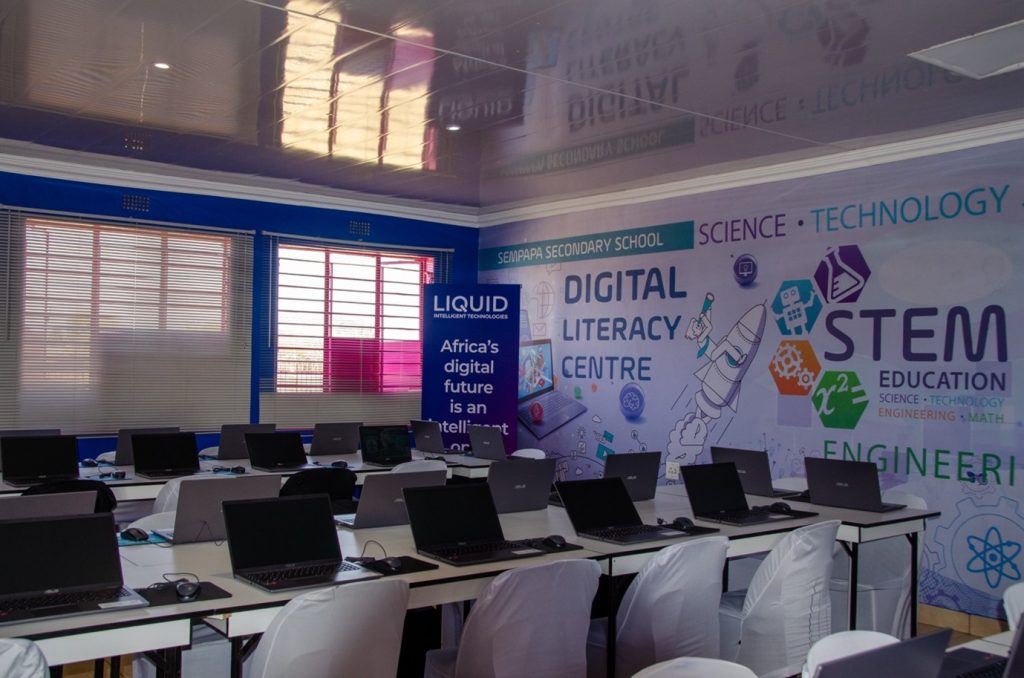
To bypass these physical constraints, an institutional cross-sector consortium comprising Liquid Intelligent Technologies, Microsoft, and South Africa’s Department of Communications and Digital Technologies (DCDT) has officially launched a state-of-the-art Mobile Digital Lab.
Unveiled at the Royal Bafokeng Institute in Phokeng, near Rustenburg within the North-West province, this agile infrastructure asset is engineered to bring high-fidelity technical training directly to the doorsteps of rural and disadvantaged youth.
The Strategic Architecture: Cross-Sector Tri-Sector Alliance
The deployment represents a tightly coordinated execution model where public policy, corporate capital, and technological platforms intersect to de-risk rural youth unemployment. Rather than operating in isolated silos, each partner anchors a distinct layer of the mobile facility’s operational stack:
The Mobile Digital Lab Operational Stack
-
Sovereign Oversight | SA Department of Communications & Digital Technologies (DCDT)
Aligns the deployment with national digital transformation goals and provides state-level governance.
-
Infrastructure & Connectivity Layer | Liquid Intelligent Technologies South Africa
Engineers the physical mobile unit vehicle and establishes the high-speed network backbone.
-
Platform & Computing Power | Microsoft
Provisions the underlying cloud software suites, operating systems, and interactive learning modules.
-
Ecosystem & Community Interface | Royal Bafokeng Institute
Manages localized student onboarding, physical spatial hosting, and regional routing.
Technical Specifications & Operational Mandate
By opting for a mobile vehicle framework over a static building, the consortium has dramatically optimized the cost-per-beneficiary metric. The lab is built to move fluidly between remote communities, setting up temporary high-tech educational baselines in zones completely lacking stable internet connectivity or computer access.
The Tri-Pillar Curriculum Framework
The training curriculum delivered within the mobile unit moves past elementary device orientation to focus on building long-term cognitive and technical capabilities:
-
Foundational Digital Literacy: Onboarding absolute beginners into data structures, internet navigation, and secure digital workflows.
-
STEM Acceleration: Hands-on instruction in Science, Technology, Engineering, and Mathematics to prepare learners for modern technical roles.
-
Specialized Leadership Development: Soft skills, entrepreneurial frameworks, and project management training designed to turn technical proficiency into sustainable, local livelihoods.
Strategic Overview of the Mobile Deployment
| Operational Vector | Core Asset Infrastructure | Targeted Socio-Economic Outcome |
| Target Demographic | Rural learners and unemployed youth in the North-West province. | Bridging the rural-urban digital divide and creating alternative employment corridors. |
| Infrastructure Model | Mobile unit equipped with computing hardware and dedicated satellite/cellular data backhaul. | Eliminating the high capital expenditure and maintenance liabilities of brick-and-mortar facilities. |
| Strategic Alignment | South Africa’s National Digital Transformation Targets. | Integrating historically marginalized sub-national clusters into the mainstream digital economy. |
The Index Take
The launch of the Liquid-Microsoft-DCDT mobile digital lab highlights a critical paradigm shift in emerging-market development: if the population cannot travel to the infrastructure, the infrastructure must mobilize to reach the population. For years, rural youth across South Africa have been locked out of the tech ecosystem simply because of the transit gap to urban centers. By deploying high-fidelity learning labs on wheels, this partnership treats infrastructure as a service rather than a static monument. For tech companies looking to build a resilient, continent-wide consumer or talent base, the mobile architecture demonstrated in Phokeng provides a highly scalable blueprint for solving last-mile digital inclusion deficits.
Sources & References
-
[1] Connecting Africa Terminal: Liquid, Microsoft, and SA’s DCDT Launch Mobile Digital Lab for Rural Skills Acceleration
-
[2] Liquid Intelligent Technologies Intelligence Brief: Corporate Release: Mobile Digital Lab Deployed in Partnership with Microsoft and State Networks