The primary challenge facing small and medium-sized enterprises (SMEs) across emerging markets has historically been treated as a binary issue: companies either lacked the capital to grow or lacked the digital literacy to compete. For years, the market response to this split was highly siloed. Commercial banks focused strictly on balance sheet lending and credit scores, while global technology firms deployed generic, disconnected digital marketing bootcamps.
But as we pass mid-2026, the lines separating financial services from technological capacity building have completely dissolved. In an increasingly volatile economic landscape, handing an un-optimized business a line of credit without modern operational workflows is a recipe for non-performing loans (NPLs). Conversely, training an entrepreneur on advanced artificial intelligence tools without giving them access to working capital is an exercise in theoretical frustration.
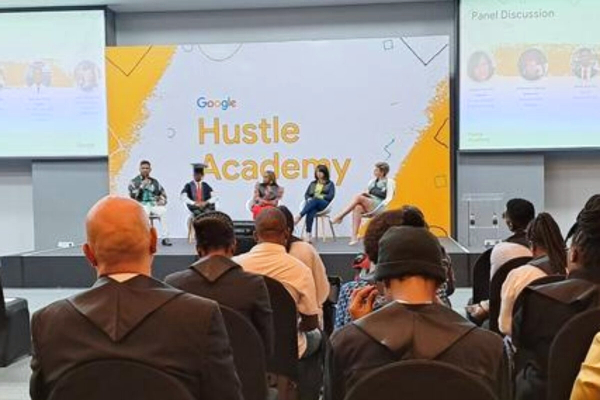
The strategic partnership announced between Absa Bank Kenya PLC and Google Hustle Academy targets this exact market disconnect. Over the next 12 months, the alliance aims to co-train and offer structural financial backing to 3,000 Kenyan SMEs, combining Google’s AI-centered operational bootcamps with Absa’s customized credit infrastructure and market linkages.
1. The Anatomy of the Framework: Capital Meets Compute
The program—which has already quietly advanced through three cohort sessions onboarding more than 600 entrepreneurs—is structurally distinct from legacy corporate social responsibility (CSR) initiatives. It represents a deeply pragmatic operational pipeline designed to future-proof the very backbone of Kenya’s economy, where MSMEs account for over 80% of employment and contribute roughly 30% of the national gross domestic product (GDP).
                 THE UNIFIED SME STACK (2026)

  GOOGLE HUSTLE ACADEMY LAYER          ABSA BANK KENYA LAYER
  ┌─────────────────────────┐          ┌─────────────────────────┐
  │ • AI Prompt Engineering │          │ • Structured Credit     │
  │ • Automated Bookkeeping │ ◄──────► │ • Cash Flow Dashboards  │
  │ • Predictive Analytics  │          │ • Supply Chain Linkages │
  └─────────────────────────┘          └─────────────────────────┘
                       ▲            ▲
                       │            │
                       └─── SME ────┘
                     (Scale Engine)
The Technological Component (Google)
Through its virtual bootcamp model, Google is shifting its curriculum away from basic social media marketing toward AI-powered business scaling. Small business owners are trained to leverage generative AI and predictive analytics tools to automate inventory tracking, streamline customer outreach, run hyper-targeted digital ad campaigns, and eliminate administrative background drag.
The Financial Component (Absa)
Once an enterprise passes through the capacity-building funnel, Absa intercepts the pipeline to provide the practical growth engine:
-
Tailored Credit Facilities: Moving beyond rigid collateral demands to offer flexible cash-flow-based financing and asset-backed lending.
-
Formalization & Governance Advisory: Guiding informal merchants through the legal, regulatory, and tax engineering required to transform a “hustle” into a bankable corporate entity.
-
Value Chain Integration: Utilizing Absa’s institutional enterprise network to connect local manufacturers and service providers directly to larger corporate and government procurement contracts.
2. De-Risking the Bank: The Hidden Macro Strategy
While the program is packaged as a developmental win for local businesses, the macro strategy for Absa is highly defensive and analytical. In Kenya’s current macroeconomic climate, traditional banking models face significant pressure from shifting regulatory guidelines and fluctuating interest rates.
To expand its lending portfolio safely, a bank must actively lower the risk profile of its borrower pool.
By pushing its prospective SME customers through Google’s rigorous operational bootcamp, Absa is effectively letting tech infrastructure handle the heavy lifting of business de-risking. An entrepreneur who knows how to utilize AI tools to manage cash flow metrics, cut operational overhead by 20%, and run predictable digital acquisition channels is a fundamentally safer credit bet than a legacy merchant operating off disconnected paper ledgers.
Structural Matrix: The Evolution of African SME Development
| Operational Metric | Legacy Business Support Models | The Modern 2026 Bank-Tech Hybrid |
| Primary Curriculum | Basic accounting, inventory lists, and setting up Facebook pages. | AI-driven automation, prompt engineering, and digital workflow design. |
| Capital Allocation | Disconnected from training; founders must apply through standard consumer rails. | Direct structural integration into tailored banking products and asset financing. |
| Data Visibility | Fragmented spreadsheets with high time-to-insight latency. | Real-time digital tracking of customer acquisition costs and operational margins. |
| Ecosystem Goal | Micro-enterprise survival and basic livelihood sustainability. | Systematic formalization, scalability, and corporate value chain onboarding. |
3. The Institutional Race for the High-Velocity Merchant
Absa’s alliance with Google is part of a broader institutional race taking place across East Africa. Just last month, I&M Bank rolled out a similar initiative leveraging the Hustle Academy framework for its MSME base.
This trend demonstrates that tier-1 commercial banks have reached a clear consensus: software competency is now a prerequisite for financial inclusion. The banks that dominate the small business segment over the next decade will not be those that simply offer the lowest interest rates, but those that actively embed themselves into the operational software stack of the businesses they fund. By positioning themselves at the point where technology training meets equity and credit access, Absa and Google are setting a long-overdue standard for how public-private ecosystems can scale real-world enterprise.
The Index Take
The Absa-Google partnership marks the end of the era of empty “digital literacy” certifications. In the modern economy, true literacy is measured by whether an entrepreneur can use an AI prompt to optimize their supply chain and leverage a digital ledger to clear a bank loan.
By marrying Google’s technical scalability with Absa’s domestic balance sheet power, this 3,000-SME rollout provides a clear blueprint for sustainable economic development. The future of emerging-market growth doesn’t depend on creating a few highly visible tech unicorns; it depends on upgrading the operational architecture of thousands of everyday businesses. The organizations that build the infrastructure for that upgrade will inevitably own the financial and commercial pipelines of the future.
Sources & References
-
[1] Dawan Africa Corporate Bureau: Absa Bank Partners With Google to Provide AI Education to 3,000 SMEs
-
[2] Nipashe Biz Investment Log: Absa Bank Kenya Partners with Google Hustle Academy to Train 3,000 SMEs
-
[3] Tech-Ish Tech Report: Absa and Google’s Hustle Academy to Train 3,000 Kenyan SMEs in a Year
-
[4] Business Now Financial Desk: Absa Teams Up With Google to Train 3,000 SMEs in Kenya On Digital Tools and Financing