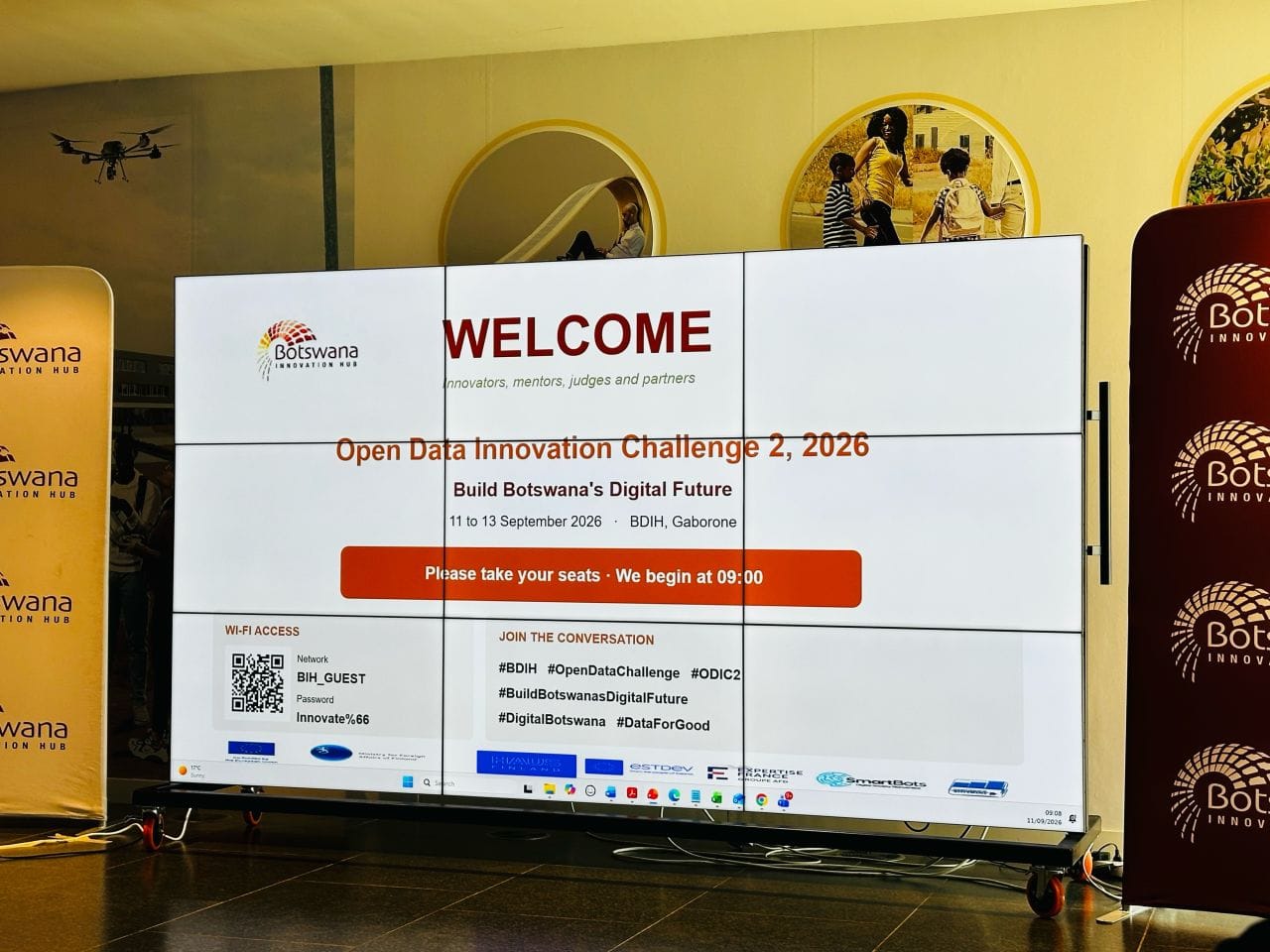
Botswana opened the second edition of its National Open Data Innovation Challenge on September 11 at the Botswana Digital and Innovation Hub in Gaborone, bringing together innovators, mentors, judges, and partners for a three-day push to turn open data into solutions that address real problems in Botswana’s communities and economy. The event, running through September 13, builds on a first edition that laid the groundwork for what organisers are framing as a genuine step toward Botswana’s digital future rather than a one-off hackathon.
The venue itself is worth knowing a bit about. BDIH is Botswana’s first Science and Technology Park, built to give technology-driven and knowledge-intensive businesses a base to develop and compete in regional and global markets, with a broader vision of state-of-the-art telecommunications infrastructure and business support services once fully built out. Hosting a national innovation challenge there rather than at a generic conference venue signals an intent to connect this event to Botswana’s longer-term digital infrastructure ambitions, not treat it as an isolated weekend activity.
That connection to something bigger is consistent with Botswana’s actual track record on open data specifically. The country has been building institutional infrastructure around this exact theme for years, dating back to the CODATA Botswana National Committee, established in 2018 following International Data Week, held that same year in Gaborone. That committee has continued pushing a National Open Data Forum and a broader Open Data Open Science initiative, aimed at bringing together government, universities, researchers, and industry to work through data policy and management questions at a national level. Botswana also hosted VizAfrica, a data visualisation symposium that drew roughly 189 participants from government ministries, universities, and industry in 2019. None of this guarantees ODIC2 will produce standout results, but it does mean the challenge is landing inside a genuine, sustained national effort around open data rather than starting from nothing.
Botswana Innovation Hub, the organisation behind BDIH, has run structured challenge and grant programmes before too. Its Grand Challenges Botswana initiative partnered with the African Academy of Sciences and the African Union Development Agency to fund locally developed innovations using AI and big data analytics specifically for the tourism and agriculture sectors, explicitly tied to Botswana’s National Development Plan priorities around economic transformation. That kind of programme-running experience matters for a national innovation challenge, since turning a weekend of enthusiasm into ventures or policy ideas that actually go somewhere afterward depends heavily on the institutional follow-through behind the event, not just the energy in the room during it.
For the three days of ODIC2 itself, the format centres on collaboration: participants working through open datasets to build solutions with real relevance to Botswana specifically, guided by mentors and evaluated by judges, with the explicit goal of producing something that could plausibly make a difference in the country’s communities and economy rather than a purely academic exercise. That’s a meaningful design choice for an open data challenge, since the value of these events tends to hinge less on how clever a prototype looks over a weekend and more on whether the underlying idea has an actual path to being used by the government, businesses, or communities the data was drawn from in the first place.
Botswana’s push into open data and digital innovation doesn’t get anywhere near the regional attention that Nigeria, Kenya, or South Africa’s tech ecosystems do, but events like ODIC2 are exactly the kind of grassroots infrastructure-building that tends to go unnoticed until a country’s tech scene reaches a scale that’s harder to ignore. Whether this second edition produces ventures or policy ideas with genuine staying power will likely take months to become clear, well past this week’s three days in Gaborone.