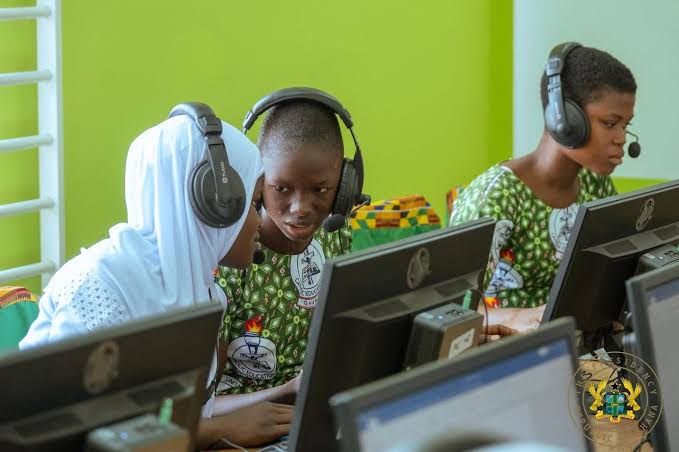
Ghana is on the verge of becoming one of the few African countries to embed artificial intelligence and coding directly into basic education, from kindergarten through junior high school. Education Minister Haruna Iddrisu announced the reform in Accra on July 20, and two days later, the National Council for Curriculum and Assessment (NaCCA) presented the completed revised curriculum to the Ministry of Education. What hasn’t happened yet is final approval. The document still needs to clear President John Dramani Mahama’s desk, Cabinet, and Parliament before a single classroom is required to teach it, and no timeline has been given for when that might happen.
The reform, which Iddrisu has branded a “Smart Start curriculum,” adds coding, artificial intelligence, and electronics to basic education, alongside Technical and Vocational Education and Training and a stronger push on ethics and civic education. NaCCA Executive Secretary Prof Samuel Ofori Bekoe has described the design choice behind how coding gets taught: the same underlying skills show up in two subjects at once, framed as “quantitative thinking” inside Mathematics and “computational thinking” inside Computing, giving pupils two different on-ramps into the same foundational logic before automation and AI concepts build on top of it later.
It would be easy to read this as government adding a few trendy subjects to an existing curriculum, but the scope goes considerably further. The same revised document proposes teaching in Ghanaian languages as the medium of instruction from kindergarten through Primary Three, with English introduced as a subject through play-based oral activity rather than formal instruction that early. It also introduces Chinese as an optional foreign language in schools with trained teachers available, alongside a newly standardised Arabic curriculum for Primary One through Six. Coding and AI are landing inside a much broader rethink of what basic education in Ghana should look like, not a standalone tech initiative bolted onto an otherwise unchanged system.
None of this takes effect until the approval chain runs its course. Iddrisu has said the document moves from the Ministry of Education to President Mahama, then to Cabinet, and finally to Parliament, framing the whole effort as one of the most significant education decisions under Mahama’s Reset Agenda. He has been notably quiet on two practical questions that matter enormously once approval does come through: when the curriculum will actually take effect in classrooms, and how teachers, many of whom have never taught coding or AI concepts themselves, will be trained to deliver it.
Reaction so far has been largely positive. Isaac Siaw, a pupil at Susec Model School in Sunyani, said learning AI and coding would sharpen problem-solving skills and open up future jobs in a digital economy. Peter Anti, executive director of the Institute for Education Studies, called the initiative timely and commendable, arguing it aligns Ghana with global education trends and equips learners with the digital competencies and critical thinking an AI-driven world demands. That kind of institutional endorsement matters for a reform that still has to survive a full legislative approval process, but it doesn’t resolve the practical questions still sitting underneath it.
This is where the reform’s ambition runs into Ghana’s on-the-ground reality. A curriculum that exists on paper only matters if a teacher in a rural district is actually equipped to deliver it, and that depends on things far more basic than a syllabus: whether that teacher has been trained to teach coding at all, whether the school has working computers, and whether it has reliable internet and electricity in the first place. None of that is guaranteed evenly across Ghana today, and without direct investment in all three, a policy like this risks reaching well-resourced urban and private schools quickly while leaving under-resourced public schools, often in rural areas, waiting years longer for the same access.
Ghana isn’t moving in isolation. Egypt has rolled out its own AI competency framework for teachers, and the OECD and EU have been developing shared AI literacy frameworks for schools, part of a broader global recognition that AI fluency is becoming as foundational to basic education as literacy and numeracy. Ghana’s version of that push, if it clears Parliament, would put it among the earlier African movers on formal AI education rather than the majority still treating it as an optional, later-stage addition.
Why It Matters
The ambition here is straightforward and worth taking seriously: Africa’s next generation shouldn’t just grow up using technology built elsewhere, it should grow up capable of building its own. Whether Ghana’s classrooms can actually deliver on that ambition depends on decisions that haven’t been made yet, starting with a vote in Parliament that hasn’t happened.