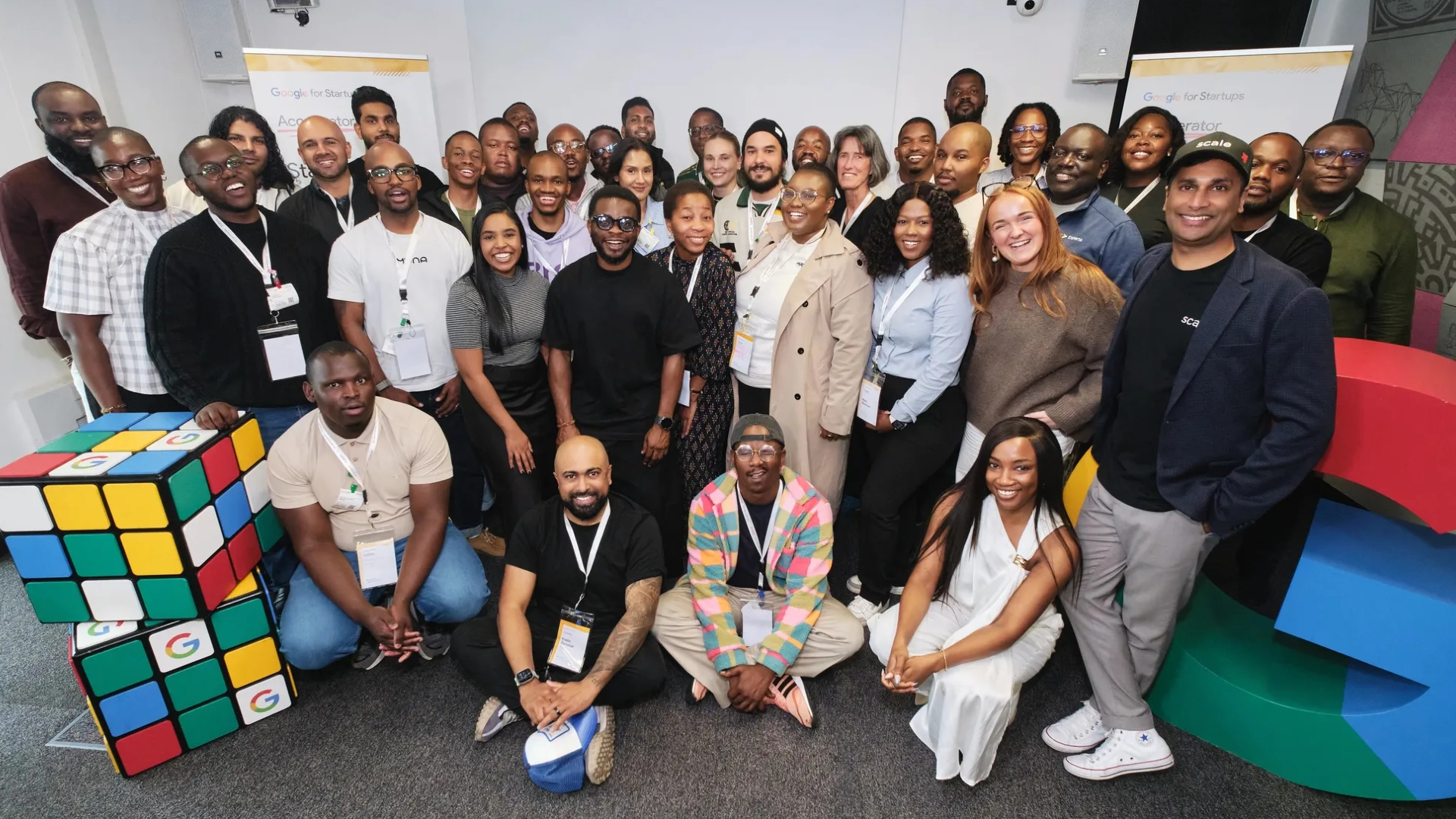
Google has named the 15 startups in the 2026 Google for Startups Accelerator: South Africa. It is the third year of the programme. Google received 1,057 applications, its largest pool yet for South Africa. The three-month hybrid programme runs from September 28 to December 4, according to Bizcommunity, and ends with a Demo Day. Each team can receive up to R1 million, about $60,000, with no equity taken. Google announced the cohort on October 5, 2026.
First, what the money is. Google’s programme page describes it as “up to R1 million” in non-dilutive cash per startup. Neither Google’s announcement nor the programme page says how much each team will actually get, so “up to” matters. Teams also get Google Cloud and AI model access and mentoring from Google engineers. Cloud credits depend on an eligibility check. Founders and key team members, including the CTO, must join every part of the programme. Google chose South African-led startups that already earn revenue and use AI or want to.
Three of the 15 work in education. Ambani Africa helps children learn African languages through audio, video and games, and reaches families on WhatsApp and voice calls. Buddy Learning offers low-data tutoring and is building Buddy AI, a multilingual tutor on WhatsApp. Thuto is described differently by different sources. Google calls it an education startup building AI tools to improve learning outcomes. African-Startups describes a platform that rewards students for progress in academics, sport and culture, using a virtual currency called Thuto Coin. A VC4A listing calls it a reward platform and does not mention the coin. We could not confirm the coin independently.
Money and payments make up the next group. Boleka Africa matches savers and borrowers so underbanked people can reach lower-cost credit. Fly n Pay Later offers interest-free instalments on flights and travel. Scale helps startups launch and issue their own card products. Each description comes from the company or Google, and we have not checked licences or loan terms. Propela Health connects African health workers with global employers and says it wants hiring to be ethical and affordable.
Several teams use AI for business tools. Anvaya Legal AI helps legal teams with research, contract review and drafting. It draws on verified South African case law from SAFLII. Dataseka turns scattered business data into live dashboards. Daedalis builds data tools for supply chains, starting with South African mining and industry. Its platform is called OpenTRD. Tradeflow Technologies helps restaurants, bars and hotels manage ordering, deliveries and invoices. It works without changing their till systems.
Then come the everyday services. KasiCoach offers free career coaching to youth in townships and rural areas. It uses seven AI coaches on WhatsApp and Telegram, backed by training company Sicoja. Zumii turns a school stationery list into a quote. Then it sources, labels, covers and delivers the items. It says it is Black women-owned. Muna Africa gives fashion retailers the tools to run resale and trade-in programmes.
One entry needs a correction. The source text for this list ran Bro’s description into a paragraph about Broz Travels, a travel agency. That looks like a copy error. Google lists the startup simply as Bro, a mobility platform. Daily Investor describes Bro as a Johannesburg e-hailing app with no commission. Drivers pay a flat fee of R30 a day, R150 a week or R600 a month and keep each fare. It launched publicly in November 2025. Those details come from that report, not from the accelerator.
Google also quotes wider figures. Since 2018, its Africa accelerators have supported more than 190 startups in 17 countries. Those companies have raised over $400 million and created more than 3,500 jobs, according to Google. These numbers cover all its African cohorts, not just South Africa, and Google’s own claims have not been independently checked.
Applications for this year closed on August 28. Founders who want the next round can register their interest on the programme page. Worth watching are the December Demo Day and what each startup builds with the support.
Sources: Google, Introducing our 2026 cohort; Google for Startups Accelerator: South Africa programme page; Bizcommunity; African-Startups cohort profiles; Daily Investor on Bro; VC4A listing for Thuto.
A note for startup founders: Don’t practice on investors. Practice on AI first. RaiseReady by Index Prima is an AI fundraising simulator for African founders: upload your pitch deck, get a readiness score and face a tough AI investor before the real meeting. Find this post, and every post we publish, at raiseready.indexprima.com.