Modern warfare, asymmetric security threats, and the proliferation of low-cost militant incursions across the Sahel corridor are forcing a dramatic reimagining of African security logistics. Historically, the African defense apparatus has been completely dependent on foreign imports, sourcing kinetic hardware, radar, and aerial surveillance tools from legacy Western or Asian contractors. This reliance creates massive vulnerabilities, long supply-chain delays, and intense foreign exchange pressures.
To break this cycle of import dependence and build a localized military-industrial complex, autonomous systems startup Terra Industries has launched a major cross-border expansion.
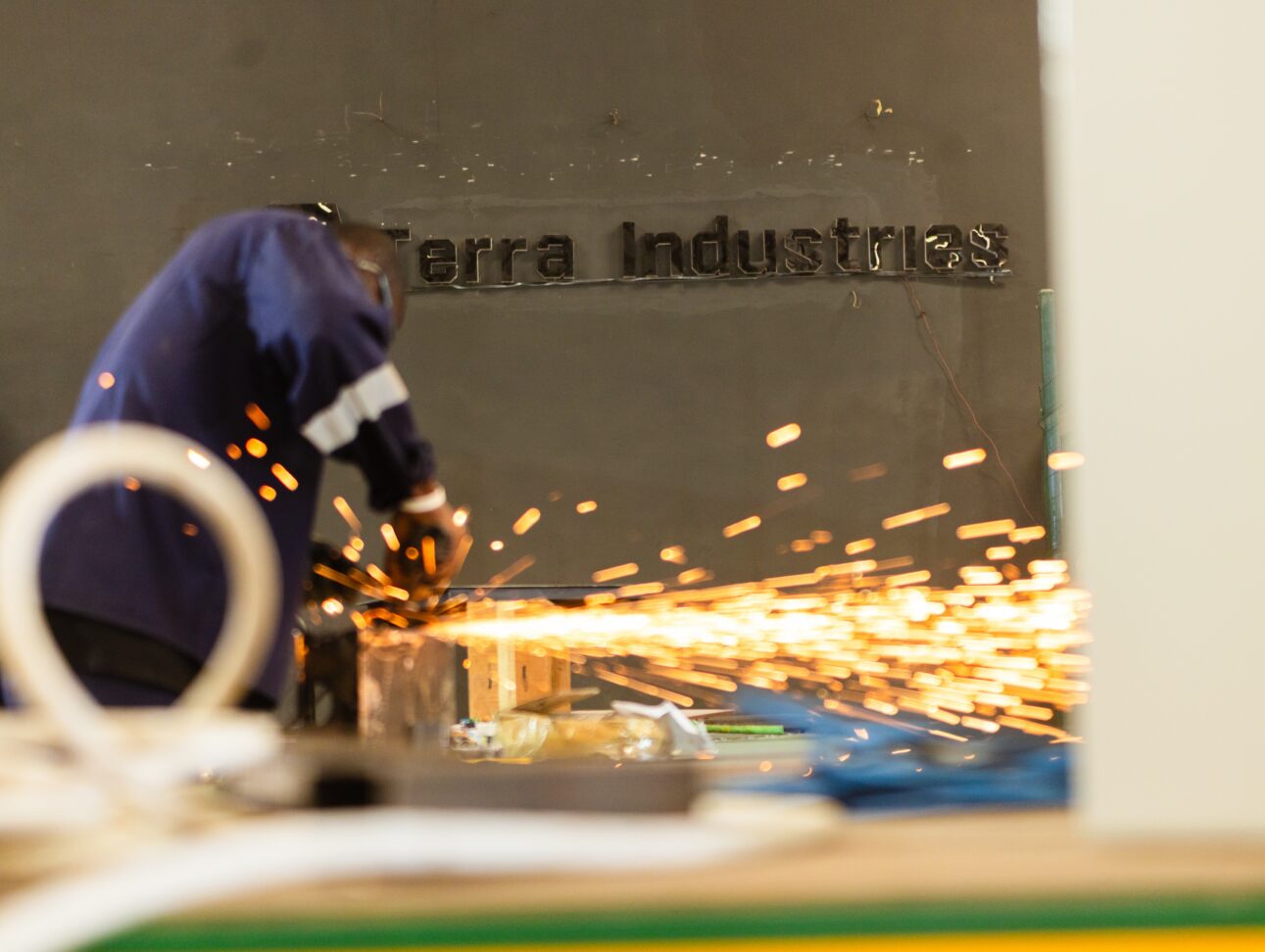
Backed by a freshly secured $34 million in total funding, the defense tech company is finalizing the construction of Pax-2 in Accra, Ghana. Set to become fully operational by the end of June 2026, the 34,000-square-foot facility will be the largest drone manufacturing plant on the African continent, establishing a new sovereign blueprint for regional aerospace and electronic defense.
1. The Capital Stack: Silicon Valley Tech Giants Back African Defense
The financial architecture behind Terra Industries’ expansion highlights a major shift in investor appetite. Historically, venture funds active on the continent avoided defense applications, preferring consumer fintech, logistics, or SaaS. Terra has shattered that pattern, drawing tier-1 global institutional capital directly into the regional hardware and aerospace sector.
The $34 million capital stack was executed across two closely linked investment rounds:
-
The Seed Inflow: An initial $11.75 million round was anchored by 8VC, the elite venture firm founded by Palantir co-founder Joe Lonsdale, known globally for its investments in high-consequence technology and defense infrastructure.
-
The Growth Follow-on: A subsequent $22 million round was led by deep-tech institutional investor Lux Capital, specifically earmarked to fund mass manufacturing lines, raw carbon-fiber composite supply chains, and top-tier aerospace engineering talent.
2. The Footprint Expansion: From Abuja (Pax-1) to Accra (Pax-2)
The construction of Pax-2 in Ghana represents a massive scaling up of Terra’s domestic manufacturing capabilities. Founded in 2024, the company originally established its primary production base at Pax-1—a 15,000-square-foot facility in Abuja, Nigeria.
While Pax-1 continues to serve as an essential production node—closely integrated with the Nigerian military via a joint venture framework with the Defence Industries Corporation of Nigeria (DICON)—its capacity is fully stretched by domestic state contracts.
            TERRA INDUSTRIES INDUSTRIAL SCALE RE-ALIGNMENT

  [ PAX-1: Abuja, Nigeria ]  ► 15,000 Sq. Ft. (Flagship Node & DICON Framework)

  [ PAX-2: Accra, Ghana ]    ► 34,000 Sq. Ft. (Africa's Largest Drone Factory)
                               • 120 Direct Aerospace Engineering Jobs
                               • Continuous 24/7 Production Framework
                               • Target Output: 50,000 Units/Year by 2028
The new Accra facility more than doubles Terra’s physical footprint. Operating on a continuous production schedule, Pax-2 is designed to create 120 high-value engineering jobs in Ghana while building the supply chain capacity to turn out 50,000 aerial units annually by 2028 to serve allied African nations.
3. The Hardware-Software Matrix: Deep Integration vs. Piece-Meal Imports
Terra Industries operates on a modern “defense prime” business model, mimicking the tech-first architectures of modern defense firms like Anduril or Palantir. Instead of selling disconnected pieces of hardware, the company bundles advanced autonomous drones with its proprietary, AI-powered operating system, ArtemisOS, via a defense-as-a-service subscription model.
The Pax-2 assembly lines will focus on manufacturing three core tactical platforms:
| System Platform | Tactical Designation & Specs | Security Vertical Application |
| Archer VTOL | Long-range Vertical Take-Off and Landing platform. Features a 1,000 km flight range, 40-minute mission endurance, and a 20 kg payload capacity. | Long-range surveillance, precision border patrol, and critical infrastructure monitoring (pipelines, mines). |
| Iroko UAV | Modular, mass-producible quadcopter drone built from advanced carbon-fiber composites. Up to 50 km range and a 1.5 kg payload. | First response, tactical rapid deployment, and battlefield intelligence collection for ground troops. |
| Kama Interceptor | High-speed kinetic interception drone capable of reaching dash speeds of up to 300 km/h. | Counter-UAS defense. Engineered to actively track, intercept, and eliminate hostile, modified commercial drones. |
4. The Strategic Geography: Why Ghana?
The decision by a Nigerian-founded defense firm to site its largest manufacturing asset in Accra highlights a highly strategic geopolitical play. According to Terra Industries co-founder and CEO Nathan Nwachuku, Ghana was selected due to three primary macroeconomic pillars: access to a strong pool of technical talent, structural regional logistics, and a strong political will to transform the country into an advanced, high-tech exporter.
Furthermore, as armed groups across the West African Sahel increasingly deploy weaponized, off-the-shelf commercial drones and fiber-optic strike systems, coastal West African states are facing an urgent need to build up their airspace defenses. Siting the factory in Ghana creates a politically stable, neutral regional export node. This position allows Terra to frictionlessly distribute counter-drone systems and tactical hardware to allied ECOWAS states without navigating the bureaucratic bottlenecks often associated with legacy military procurement frameworks.
The Index Take
Terra Industries’ $34 million expansion into Ghana marks a defining moment for tech-driven industrialization in West Africa. For decades, global observers argued that advanced aerospace manufacturing and precision electronic defense were outside the capabilities of sub-Saharan startup ecosystems. By building a 34,000-square-foot automated production hub, Terra is proving that African engineering can solve local security crises.
Financially, the subscription-based ArtemisOS software model provides Terra with highly predictable recurring revenue, a stark contrast to the volatile, single-transaction procurement cycles of traditional arms dealers.
However, scaling to 50,000 drones per year will require careful management of raw material supply chains, especially specialized battery components, carbon fiber, and military-grade microcontrollers, which are heavily restricted by global trade regimes. If Terra can successfully manage these international supply chains while deepening its engineering talent pool in Accra, it will not only secure West African airspace but also set a powerful precedent: Africa’s defense readiness no longer needs to be outsourced to the rest of the world.
Sources & References
-
[1] Tech in Africa Regional Analysis: Nigeria’s Terra Industries Takes Its Drone Manufacturing Ambitions to Ghana
-
[2] Terra Industries Corporate Newsroom: Sovereign Aerospace: Terra Industries Finalizes Construction of Pax-2 Factory in Accra
-
[3] SBM Intelligence Daily Watch: Geopolitical Defenses: Terra Builds Drone Factory in Accra Amid Shifting Sahel Insecurity
-
[4] Techpoint Africa Ecosystem Ledger: Terra Industries to Build Africa’s Largest Drone Factory in Ghana Following $34M Institutional Raise
-
[5] BusinessDay West Africa Intelligence: Terra Builds Africa’s Biggest Drone Factory in Ghana as Drone Warfare Surges across the Sahel
-
[6] AU-Startups Capital Index: Terra Industries Announces $34M Funding and Major West African Manufacturing Expansion
To see a detailed breakdown of the facility layout and an analysis of how this factory impacts regional defense supply chains, you can watch Nigeria’s Terra 50,000-Drone Mega Factory Overview. This video is highly relevant as it offers visual context on Pax-2’s production footprint and outlines Terra Industries’ long-term scaling strategy in West Africa.